

Tuesday, November 15, 2011

OIL INDUSTRY OF THE WORLD

Slideshow Image 1
Slideshow Image 2
Slideshow Image 3
Slideshow Image 4
Slideshow Image 5
Slideshow Image 6
Slideshow Image 7
Slideshow Image 8
Slideshow Image 9
Slideshow Image 10

PostHeaderIcon About Us

Oil Reserve & Demand Analysis
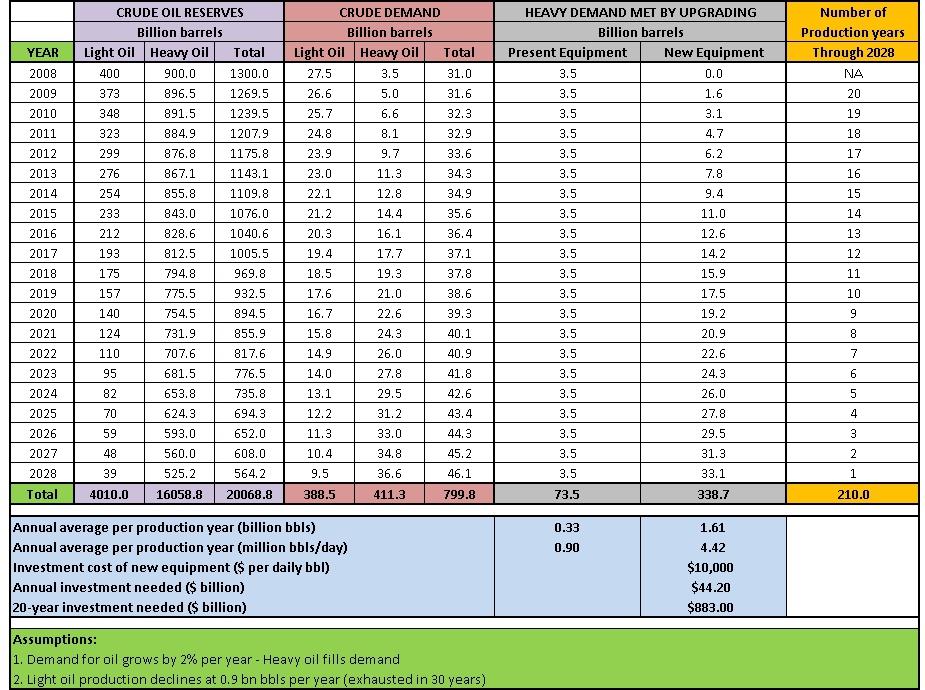
Heavy_Oil__Demand

Overview
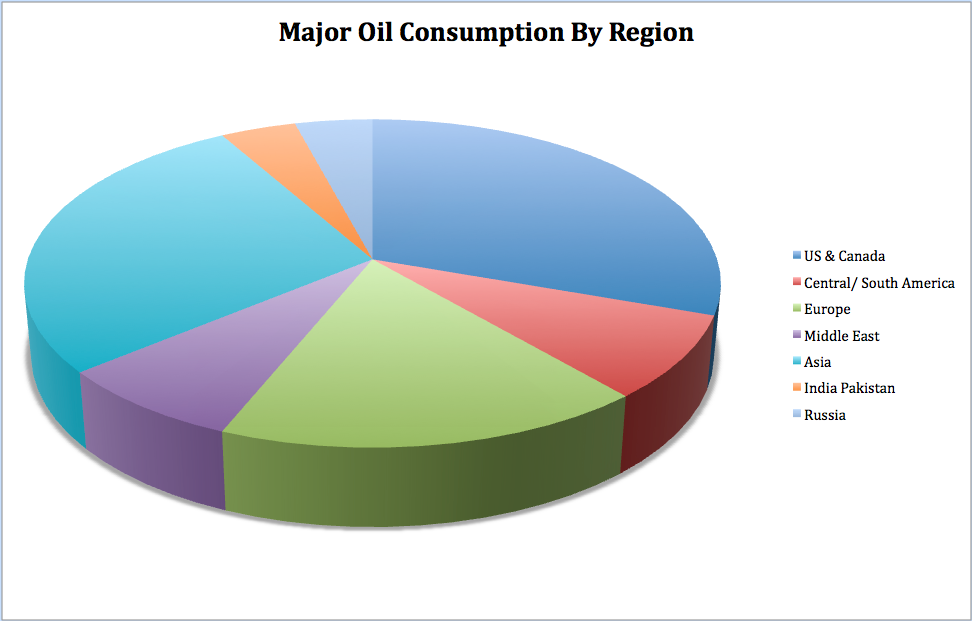
Crude petroleum is the largest single source of energy in the world, accounting for approximately 35–40% of energy consumed in the world, and is the basic building block for a large number of chemical products consumed globally. In early 2010, global crude petroleum demand was slowly recovering after the first decline in growth since the early 1980's. Demand growth in the US, Japan, and Western Europe will be slow as domestic economies start to improve. In regions such as South and Central America, Africa, Middle East, and Eastern Europe where domestic demand is slowly on the rise, growth will be more robust as markets give way to exports.  Asia continues to experience the greatest demand growth and a focus on domestic development. World oil demand is forecast to increase steadily 1-2% through 2011 and rise to 2% for 2012-2014.
"The easy oil is coming to an end," says Alex Munton, a Middle East analyst for the Scottish energy consulting firm Wood Mackenzie.
As of January 1, 2010, the estimated world proved reserves of crude petroleum were 1.2 billion barrels. OPEC currently accounts for 71% of total world oil reserves. Saudi Arabia holds the single largest share of the world's petroleum reserves at 19% of the total. On a regional basis, the Middle East accounts for nearly 56% of the world's reserves. North America is second with 15%, and Central and South America is third with 9%, following recent reserves identified in Brazil and Venezuela.
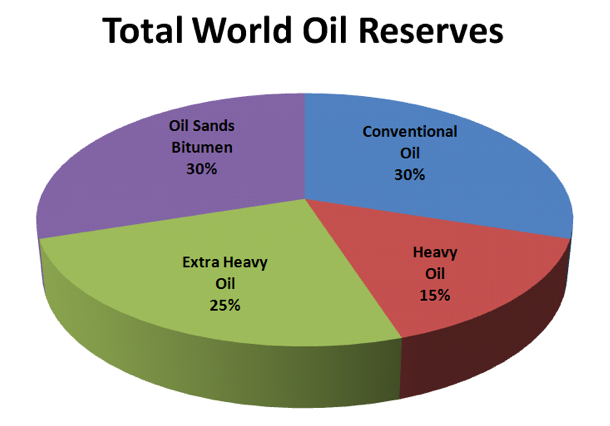
The International Energy Agency (IEA) estimates that 70% of the world’s remaining oil reserves consist of heavy, high sulfur "sour" crude.  Oil companies must either seek new sources of lighter, easier to extract and refine, crude oil or find new methodologies to utilize the world’s existing heavy oil reserves.  Since the cost for exploration, production and processing continues to climb, the focus should be on the maximum utilization of known reserves by recovering more of the original oil-in-place (“OOIP”) and producing more usable consumer products during refining. The average sulfur content of U.S. Crude oil imports increased from 0.9% in 1985 to 1.4% in 2005, and the slate of imports is expected to continue to sour in coming years. Crude oils are also becoming heavier and more corrosive than they were in the past, largely because fields with higher quality varieties were the first to be developed, and refiners' preference for quality crude oil has led to the depletion of those reserves over the past 100 years reducing the market share of light, sweet crude that remains.
Published reports indicated that at year-end 2007 there were 650 major refineries located around the world.  These refineries process a total of 85 million barrels of oil per day.  As the sources of premium light-sweet crude oil are depleted, OPEC and other global oil producers will be forced to use increasing amounts of existing heavy-sour crude oil to supply world demand.  Not only will additional refining capacity be required to process the increase supply of crude oil, but refineries will need to be designed to process heavier, lower quality crude oil in order to yield the same amount of transportation fuel. For example, premium crude oils yield almost 70% of their volume as light, high-value products (gasoline, diesel, jet fuel, kerosene), whereas heavier crude oils yield only about 50% of their volume as light products. So in order to produce the same amount of refined product from heavy, sour feedstock, a refinery has to have 1.4 times as much capacity (70 divided by 50). There would need to be 182 refineries built (52 more) in order to supply the world with the equivalent amount of transportation fuel in 2017.
As of January 1, 2010, the US had a reserve to production ratio of approximately ten years, while Russia had a reserve production ratio of seventeen years. Opec nations have a reserve ratio of 92 years while oil producing nations in the Middle East has an average of over 100 years.

GHU® TECHNOLOGY DEVELOPMENT HISTORY

Starting in May 1998, Genoil (formerly CE3 Technologies Inc.: Canadian Environmental Equipment and Engineering Technologies Inc.) researched innovative processes for the upgrading of heavy crude oils. Because heavy oil reserves account for the majority of total world oil reserves (including non-conventional oils), Genoil had realized that highly efficient processes were required to economically upgrade these heavy oils to lighter products.

To deliver the heavy oil to the market, heavy oil producers blend it with lighter oils, called condensates or diluents. This requires the implementation of an extensive infrastructure to produce the light oils and to deliver them to the heavy oil field locations. Further, this concentrated demand for light oils for blending could results in shortages and high prices.

Our concept is to upgrade on-site heavy oils to lighter oils meeting pipeline specifications, eliminating the need for blending, increasing the value of the heavy oils, and having a process with economically viable capital and operating costs even for a small-scale field unit of 10,000 bpd. Of equal or greater importance was the development of a hydroconversion upgrader technology for refineries for raising the API gravity of crude oils to refinery specifications and for recovering the refinery’s heavy residuals. Reduction of sulphur, nitrogen and metals was also a similarly critical goal.

Global consumption of fossil fuels is increasing every year and the demand for crude oil is expected to exceed 115 million barrels per day within the next fourteen years.  Meanwhile, no new refineries have been built in the United States since 1976 but the race to add refining capacity around the world has already started.  Although existing refineries can process most types of crude oil produced today, the yield of transportation fuel is reduced and waste byproducts increased due to the high sulfur and metal composition of the feedstock.  For example, it takes nearly three barrels of heavy crude oil to produce the same amount of transportation fuel that is refined from one barrel of light sweet crude.  By 2025, the amount of heavy oil produced could be as high as 60% of the total supply based on current trends in new oil discoveries (i.e., limited replacement of depleted oil reserves) and the OPEC basket “blend” of crude oils.

According to USGS statistics, the supply of heavy crude oil to be produced from conventional reservoirs in the North America alone is estimated to be 35 billion barrels using a conservative recovery factor of only 13%.  Based on OOIP calculations, an additional 135 billion barrels of oil could be produced from existing US fields using enhanced oil recovery methods.  Comparable estimates are available for proven oil basins in South America and the Middle East.  The Upstream Optimization Process including advanced waterflood solutions offers oil producers an efficient, cost-effective approach to enhanced oil recovery.
Choose to live by choice, not by chance. Make changes, not excuses. Be motivated and not manipulated. Be useful and not used. Excel and not compete. Choose self esteem not self pity. Choose to listen to your inner voice ( or Chris ) and not the random opinion of others.

GENOIL is Keeping Up With Demand

PostHeaderIcon Keeping Up With Demand

Energy, The Lifeblood of Modern Economics
For people around the world reliable energy improves billion of people's lives.  For advanced societies reliable energy fuels the technologies and services that improve lives. Energy powers everything from transportation, communication, medical care, computers, industry, agriculture, and trade.  For these reasons energy is the most important issue facing the world today. Meeting the growing demand!
The benefits of energy are too long to list. To get a complete picture we must count the energy demanded by public services, private enterprise and societies "other needs." An example of indirect consumption includes energy required to run retail shops, office buildings, schools, hospitals, commercial transportation (airlines, trucking, railroads) and the manufacturing industry, steel & chemical industries. Everyone around the world benefits from energy usage, and higher living standards brought forth through economic growth.
The average North American consumes double the energy "footprint" of it's nearest competitor Russia. In direct energy usage is about two thirds of the total world energy consumption. As we try and solve these challenges, we must consider the total energy picture.
One of the biggest challenges facing the world today is how to meet the worlds energy needs reliably and affordably even as world demand grows by leaps and bounds.
By meeting these challenges we seek to revitalize the US economy who suffers the most from this energy crisis. More and more energy is being found in difficult or hard to reach places. The global energy industry will be required to grow to meet these challenges. All this must be achieved by minimizing the risk to our environment and ensure air quality safety for future generations. That includes sulfur and carbon reduction.
Gaining access to inexpensive clean energy will bring a improved future for us all and help us to eradicate poverty. The world's population is expected to rise from 6.7 billion today to almost 8 billion by 2030. Rising populations create much greater demand for energy for indirect and personal needs. Genoil expects energy demand to rise at a rate of 1.2% per year to 2030.
In non OECD countries, rapid economic growth is expected to bring a gigantic growth in energy demand. By contrast OECD countries demand is expected to be slightly lower in 2030 than it is today. This is surprising considering the economic growth forecast is expected around 50% by this time.
Due to the use of new energy saving technologies the energy it took to produce one GDP unit fell by over 22% from 1980 to 2000. As a result of higher energy costs, energy per GDP unit will continue a more rapid decline. This will save a tremendous amount of energy. Without this world energy demand could grow up to 95 percent by 2030.
Power generation is the largest energy demand sector followed by industrial demand, transportation, and lastly commercial/residential demand. The power generation sector will account for 40% of total primary energy demand by 2030. It's largest energy source will be coal which is very high in carbon emissions.
Transportation is the fastest growing energy sector. It is the most heavily dependent on oil. Globally 98 percent of transportation runs on oil.  By 2030 it is estimated that heavy duty vehicles will have become the largest transportation demand segment.  In OECD countries personal transportation is expected to drop 25% by 2030, while doubling in non-OECD countries.  It is anticipated that demand from China and India will overtake the developed nations as the largest source of commercial transportation demand.
To accurately estimate future transportation demand we must take into consideration the vehicle saturation rates. In the USA it's as high as 80% the highest in the world. Europe has a much lower level of vehicles per capita. In other areas such as China, rising incomes are resulting in rapid vehicle saturation growth. But it is forecasted that by 2030, China's vehicle saturation per capita rate will be almost 1/10th the level of the United States with about 8 vehicles per 100 persons.
The global vehicle market is expected to change through the coming years. Traditional gasoline driven vehicles will continue to make up a majority of the market, followed by diesels, but Hybrids and other advanced vehicles will grow rapidly eventually constituting 15% market penetration compared with 1% today.
It is estimated that by 2030 total crude oil demand will reach 104 Million barrels per day, a 25 % increase from today.  Meeting this demand in an economic and environmentally friendly way is the number one priority at Genoil.

Genoil Business Model

PostHeaderIcon Genoil Business Model


Our business model is to utilize critical new technologies to solve large energy and environmental problems. We further seek to create strategic customer partnerships to share in the financial, economic and environmental benefit of each technology. Our partnerships create long term relationships which provide long term recurring revenue which benefits our clients, shareholders, and Genoil Inc.
Genoil's client driven business model is designed to maximize revenues from the commercialization or licensing of its core technologies. Revenues will be generated from engineering and consulting work. These efforts are facilitated by our world class board of advisors, partners, and Genoil's engineering and operating team. Our primary sources of revenues will be from:
  • Genoil Hydroconversion Upgrader.
  • Upstream & Downstream Engineering.
  • Oil and Water Separation.
  • Consulting services.
  • Procurement.
  • Oil field testing.
  • Soil and sand remediation.
  • Environmental cleanup.
  • Marine oily water separators.
  • Environmental protection. 
Genoil Hydroconversion Upgrader (GHU)
  • 900 Billion Barrels of heavy and even more sour crude worldwide.
  • Upfront/basic engineering: project design, procurement and implementation for upstream and downstream projects.
  • Schedule A engineering Project design, procurement and implementation for upstream and downstream projects.
  • Increase the product yields of crude $20-$30 per barrel.
Technology licensing fees:
  • Long term licensing agreements based on $ per flowing bpd.
Production royalty revenues:
  • Long term upfront licensing fee based on $ per flowing bbl.
Merchant plant revenues (based on Genoil ownership of the plant with/without strategic partners):
  • Profit on acquisition of cheap crude oil, upgrading and then selling upgraded crude oil.
  • Profit on acquisition of heavy oil reserves, upgrading and then selling upgraded crude oil.
  • Service agreement based on a toll fee for upgrading customer'engs crude oil.
Upstream & Downstream Engineering:
Engineering and consulting revenues:
  • Alliance with Stone & Webster
  • Refinery retrofitting
  • Upfront/basic engineering:project design, procurement and implementation for upstream and downstream projects
  • Schedule A engineering
  • ECM: Approximately 15% - 20% of total project cost
Oil & Water Separation
With expected new partnerships, sales income stream:
  • Integrates with our sand decontamination unit.
  • Crystal SeaTM bilge water separator for maritime use.
  • Crystal Separator for oil field production.
  • Waste pits reclamation and decontamination.
  • Waste water recycling.
  • For contamination cleanup/ Oil spills.
  • Port services. Bilge cleaning within the port.
  • Crystal Sea Separator for Oil Platforms.
  • Gasoline Diesel Service Stations/Car Washes.
  • Cement Factories.
  • Salt Mines.
  • Thermal Power Stations.
  • Sand-washing plants, recycling of condensed steam in oil batteries.
  • Refineries.
Port Oil & Water Separation (Environmental Cleanup)
Technology licensing fees:
  • Long term licensing agreements based on $ per vessel ton.
  • Long term upfront licensing fee based on $ per vessel traffic. 
  • Waste oil/slop oil : recoup the oil and sell the oil.
  • Emergency port response plan. Always on standby.
Three Phase Separation & Well Testing:
  • Mobile testing unit.
  • Separation oil water & gas.
  • Mobile units sales. 
Sand Cleaning:
  • Cleaning up contamination.
  • Waste Pit environmental cleanup.
  • Reclaiming oil.
Oil Recycling:
  • Waste pit oil processing & recycling (some waste pits are up to 250,000 barrels).
  • Removal of Benzene from waste pits and surrounding sand.
  • 10 million barrels of tank bottoms produced annually.
  • Removal of other environmental dangers from waste pits such as Arsenic, Barium, Cadmium, Chromium, Lead & Selenium.
  • Ground water cleanup and rehabilitation. 
  • Dead oil recycling.
  • Tower bottoms/sludge recycling.
  • Power to save local communities, and prevent harm to young children.
Genoil"s long term goal is to vertically integrated it's technologies delivering finished petroleum products into the global market.

Genoil can outsource new green energy

Genoil is a new kind of energy company focused on delivering some of the most advanced petroleum technology solutions in the world. We are based in Alberta, Canada and have seven primary research driven areas of focus; desulfurization & carbon reduction, oil upgrading and recycling, water purification technologies, well testing, hydrogen generation centrifuge, and sand cleaning. Through our alliances with HH Sheikh Sultan Bin Khalifa Bin Zayad Al Nahayan, and with the engineering giant Stone & Webster, a wholly owned subsidiary of The Shaw Group Inc., Genoil offers its customers the most innovative proprietary technology, first class global engineering, procurement and construction services. With this great advantage we are ready to tackle any project large or small with unparalleled accuracy and efficiency. Genoil's dedicated engineering team has a long history of providing solutions to significant refining and environmental challenges.  

GHU Heavy Oil Desulfurization Upgrader ®, The average barrel of crude oil in the world is getting heavier and sourer, while specifications for fuels are getting more stringent on sulfur content.  The GHU Upgrader will allow Genoil to capture price premiums and potentially allow sales into new markets of sweetened crude oil. Our new breakthrough gas-oil blending process desulfurizes over 99.5% without the need for external hydrogen or natural gas, with an operating cost saving of 61% compared with conventional competing technologies. This gives Genoil the competitive edge in remote regions where there is no access to natural gas and hydrogen. The Genoil GHU can desulfurize some of the largest oil fields in the world at a fraction of the cost of our competitors. With extremely low capital cost our process overcomes the technological and economic refining challenges of lesser grades of oil and can operate independently at a well, or at a refinery. The GHU upgrader significantly increases the product yields of all crudes including light, Arab heavy, extra heavy, and heavy refinery feedstocks by dramatically raising the API and virtually eliminating sulfur. Turning lower value oil into high value environmentally safer crude oil and transportation fuel is what we do best. The GHU performs multiple tasks simultaneously in a single step, upgrading and desulfurization and removing other impurities with incredible economics, and has been tested successfully on oil as low as 6.5 API. Our process achieves a zero waste bottomless barrel in the upgrading process unlike any traditional upgrading methods, and the heavier residue fraction left after upgrading is reused in a syntheses gas gasifier to produce the required hydrogen, steam and power to operate the process. Was designed to increase refinery profits margins by $30-$40 per barrel. 

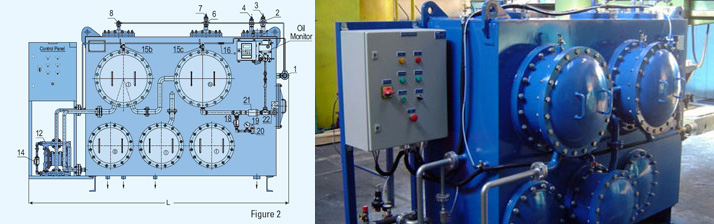
Crystal Sea Separator TM, The only separator on the market which separates dissolved contaminants! This revolutionary oil water separator (OWS) can run continuously and doesn't require filter medium and has the lowest cost of ownership on the market. Certified by the US Coast Guard and the American Bureau of Shipping, provides fresh clean and crystal clear water. With no internal moving parts Crystal Sea greatly exceeds the guidelines and compliance standards of the United States Coast Guard and the International Maritime Organizations Resolution MEPC 107 (49) for pollution prevention equipment for ship bilges. Manufactured by DongHwa Entec in South Korea, our separators ensure high performance, outstanding reliability, and are suited for a wide range of installations. The system goes beyond compliance to reduce the impurities in water to 1 part per million without the use of any filters, and almost has no cost of operation. As with the Crystal Separator, user friendly features such as semi automated operation, self-cleaning oil sensors, and automatic shut down. Quick and easy setup, so that any time, effort, or money needed for installation is significantly reduced. The Crystal Sea separates not only oil from water, but also segregates the different types of oil reclaimed such as motor, heavy fuel, slop, and crude oil. This is the only technology designed to take oil out of the bilge and convert it back to valuable product for resale. Read more  Request a quote

Genoil Waste Oil Treatment System,  Refineries and oil wells around the world produce millions of barrels of unusable oil each year. Environmentally this presents a severe disposal and treatment problem. Most of this oil is disposed of in waste pits all over the world. Over time these pools may develop high levels of Arsenic, Barium, Cadium, Chromium, Lead, Selenium & Benzene contaminating local groundwater and causing unwanted health problems especially with young children. Conventional methods to treat this waste oil uses chemical and thermal treatments resulting unwanted "Dead Oil" which presents more difficult challenges. The Genoil R & D team has developed the most profitable self supporting slop oil treatment process in the world. Our process can treat any type of slop oils turning it into valuable product. Genoil R & D team has come up with a solution to this enormous burden.

Crystal Separator, The only separator capable of removing dissolved contaminants, it was designed for the rigors of the oil field and is a land based two phase oily water separation unit, like the Crystal Sea, requires no filter and with no internal moving parts is designed to run 24 hours a day in the harshest environment. Crystal can keep up with the most aggressive production quota's and never gives up. Our separators are designed to run non stop 24/7/3650. Ten years of continuous operation is not too demanding, Crystal can handle any production schedule you bring at it. Each stage is devised to quickly remove oil particles of a certain size and to render the liquid cleaner for the next stage. Furthermore, it also precludes undue contamination and clogging of various stages by oil, resulting in trouble-free and inexpensive automated operation.  There are no limitations on oil particle size, and Crystal quickly separates emulsions and oils with very high densities. Our separator has an ultra compact footprint and is incredibly versatile. It is extremely customizable and can be utilized in a wide range of applications such as sand washing plants, oil platforms, wastewater treatment plants and salt mines.  As with the Crystal Sea, the Crystal is the only separator designed to segregate different types of oil for resale. We encourage you to visit one of our units in the field and look forward to custom building any size for your specific applications. Request a quote

Genoil Sand Decontamination Technology (GSDT), is the most agriculturally friendly and profitable process to cleanse contaminated sand from petroleum spills, using minimal water or sea water and energy consumption. Our process economically reclaims almost 100% of oil from waste pits and beaches contaminated by petroleum. Genoil was one of the first companies to enter this field a decade ago, and our recently improved patented revolutionary extraction and soil remediation methods are the most profitable and effective in the world. Our portable unit also removes and reclaims almost 100% of the oil from the sand and due to its ability to operate with sea water, is the most cost effective mobile environmental cleanup solution available. We are the only company of our kind using this innovative process that is both efficient and environmentally friendly. We are the only process able to reclaim enough contaminants to return the earth to agricultural grade soil meeting environmental & agricultural health standards. PDF Presentation

The Genoil Diamond, a three phase well testing separator efficiently separates three immiscible phases with different densities, such as associated natural gas, crude oil, water and sand. The system is designed to operate as a self-contained and compact unit that can be used to test oil well production in remote areas. It can be mounted in a permanent location or on a flat-bed trailer and moved from well to well. When the well test separator is towed to an oil well and connected to the wellhead it can connect to a well production line from atop the trailer. Amazingly separated oil is returned to the production line while sand and other sediments, gas and water are discharged separately.  The Genoil Diamond well testing system has several advantages over conventional well testing technologies that cannot be utilized as mobile units. Unlike conventional well test separators, the Diamond achieves separation of the three phases with virtually no heat consumption and no chemical requirements. Competing well testing technologies achieve separation by gravity with the fluid heated to elevated temperatures.

Allegretto Centrifuge was designed as a disk stacked centrifuge with a rotational speed successfully tested at 30,000 rpm's which is twice the rotational speed of the fastest known separator of its kind. Centrifugal forces generated by this separator exceed 55,000 G's allowing for the separation of two immiscible liquids with extremely close densities. Allegretto is the result of a recent effort aimed at advancing a novel hydrogen generator based on gravitational electrolysis.

"We are in the midst of the most important and exciting time in Genoil's history"
David Lifschultz, Chief Executive Officer

Sunday, November 13, 2011

Rio20 Brochure


Adaptation Learning Mechanism Initiative


[last updated March 27, 2009 4:13 PM] Shortcuts:
General Information
Partnership website(s)
Expected Timeframe
January 2007 - Open Ended
Partners
Governments:
  • Government of France - Institut de l’Énergie et de l’Environnement de la Francophonie
  • Government of Switzerland - Swiss Agency for Development and Cooperation
Major Groups:
  • Heifer International (United States of America)
UN System: Other intergovernmental organizations:
  • UNFCCC (Germany)
  • UNEP (Kenya)
  • World Bank (United States of America)
Other:
  • Nautilus/AdaptNet (Australia)
  • Africa AdaptNet (IDS/FARA) (Kenya)
  • Institute of Development Studies (United Kingdom of Great Britain and Northern Ireland)
  • IFPRI (United States of America)
 
Thematic Focus
Primary Themes:
  • Education
  • Institutional framework for sustainable development
  • Agriculture
  • Climate change
  • Drought
  • Desertification
  • Disaster management and vulnerability
Secondary Themes:
Geographic Coverage
Geographic Scope: Global
Country(ies) where the partnership is being implemented:
Albania, Bhutan, Ecuador, Eritrea, India, Kenya, Morocco, Namibia, Samoa, South Africa, Uganda, Zimbabwe
National Focal Points
This partnership has not made any contact with the national focal points for sustainable development in the countries involved
Goals and Objectives
Summary of the partnership's goals and objectives
Adaptation to climate change is a growing priority for development agencies, governments and vulnerable communities. However, capacity and awareness are often limited, and experiences have yet to be widely shared. The ALM partnership initiative will draw from experiences on the ground, featuring tools and practical guidance to meet the needs of developing countries. Seeking to provide stakeholders with a common platform for sharing and learning, the ALM will also complement the wide range of adaptation knowledge networks and initiatives already underway. For example, the ALM is collaborating with the Nairobi Work Programme, particularly the 'Methods and Tools' and 'Planning and Practices' areas of work, and the interactive weADAPT platform.


The ALM will develop tools and resources to support:
1. Adaptation practices – what can be done to adapt to climate change on the ground?
2. Integration of climate change risks and adaptation into development policy, planning and operations – how can policies and plans support adaptation over time?
3. Capacity building – how can people be better assisted in becoming equipped for adapting to climate change?
Targets and Progress
Partnership targets
• Be responsive to the expressed knowledge needs of GEF-eligible countries;
• Draw upon a reservoir of global as well as regional resources through the activities of Technical Working Groups and Regional Partners;
• Utilize partnerships with regional institutions that will evolve in each region for gathering lessons and best practices, sharing information and improving the relevance of project products and services;
• Focus on providing support to the GEF adaptation pilot, while simultaneously supporting knowledge needs at national to local levels;
• Receive policy guidance from an Advisory Group and technical advice from Technical Working Groups (see Section IV, part iii) to ensure that both GEF and other users’ needs direct the ALM process;
• Produce a core set of deliverables aimed at meeting the knowledge needs of both the GEF and the broader adaptation community;
• Share information directly with – and derive information from – prospective users, ranging from policy developers and national development planners, to local project managers, through the website, outreach and training;
• Be an independent, open-source knowledge base, through which information and tools are shared freely by users;
• Be global in scope - launched in a pilot region in the first year, expanding to the other regions as partnerships are identified in the second and third years.
Progress against targets
developed web-based knowledge platform
20 identified case studies
10 identified lessons learned
20 Partnerships identified at global, regional and national level
Capacity-Building and Technology Transfer
Arrangements for Capacity-Building and Technology Transfer
Relationship to International Agreements on Sustainable Development
How the partnership contributes to the implementation of Agenda 21, the Programme for the Further Implementation of Agenda 21, and the Johannesburg Plan of Implementation
Contribution Agenda 21:
Contribution to the Programme for the further Implementation of Agenda 21:
Johannesburg Plan of Action: AM contributes to

Cluster on Poverty Eradication (MDGS in the following way:
1) MDG 1- ALM adresses depleted livelihood assets that undermined food security
2) MDG 3- ALM by addressing climate change it deals with burdens on women’s health and limited time to participate in decision making
3)MDG-7: ALm addresses negatively impacted natural resources and productive ecosystems

Cluster of Management of Natural Resources:
• Support evolving efforts to integrate adaptation to climate change into development planning by providing a knowledge-sharing platform
• Accelerate the process of learning through experiences
• Build on experiences on the ground
• Provide practical guidance and tools to meet stakeholders’ needs


Relevant Sections of the Programme for the Further Implementation of Agenda 21
Integration of economic, social and environmental objectives
Relevant Sections of the Johannesburg Plan of Implementation
Protection and managing the natural resource base of economic and social development ; Sustainable development of small island developing States ; Sustainable development for Africa
Coordination and Implementation
Coordination Mechanism of the Partnership
Implementation Mechanism of the Partnership
Resources
Funding Currently Available
Amount in US$:
Source(s): Private sector - IGO
Global Environment Facility
Swiss Agency for Development and Cooperation
the Institut de l’Énergie et de l’Environnement de la Francophonie.
Non-financial resources available
Type(s):
Source(s):
Funding Sought
Required Amount in US$:
Source(s) already approached:
Non-financial resources sought
Requirement(s):
Source(s) approached and details:
Additional Information
Additional Relevant Information
There has been an increase in attention and resources directed toward adaptation, which has led to greater demand for case studies, lessons learned, good practices, thematic information, policy approaches, and community-scale knowledge on adaptation. Supported by GEF, in part to improve the GEF adaptation funds, the Adaptation Learning Mechanism (ALM) aims to address these growing needs by supporting evolving efforts to integrate adaptation to climate change in development planning. This is achieved by providing a knowledge-sharing platform that accelerates the process of learning through experience, aiming to capture the current state of adaptation knowledge and promote information sharing by drawing on existing lessons from experience. The ALM builds on the successes of other knowledge management projects and works to create a highly relevant set of tools for learning from adaptation experiences as they evolve. The ALM aims to share this knowledge with relevant audiences, including agencies, project and programme developers, governments, non-governmental organizations and other adaptation stakeholders. The information sharing will set into motion a platform for continued learning. Finally, outreach will ensure that lessons learned about integrating adaptation in development planning are disseminated at a variety of scales.

To date, the ALM has been well-received and is working to further increase its utility and user-ship. The ALM’s approach to adaptation learning, focusing on structured cases, lessons and references/guidance, has been supported and encouraged by adaptation practitioners. The current stage, therefore, is centered on making improvements to the technical web structure and substance, while actively reaching out to further develop partnerships and encourage systematic inputs, and expanded use.